

Project Story 03 Bridge across the Strait
Bridge across the Strait Spanning Okinawa’s ocean in one leap
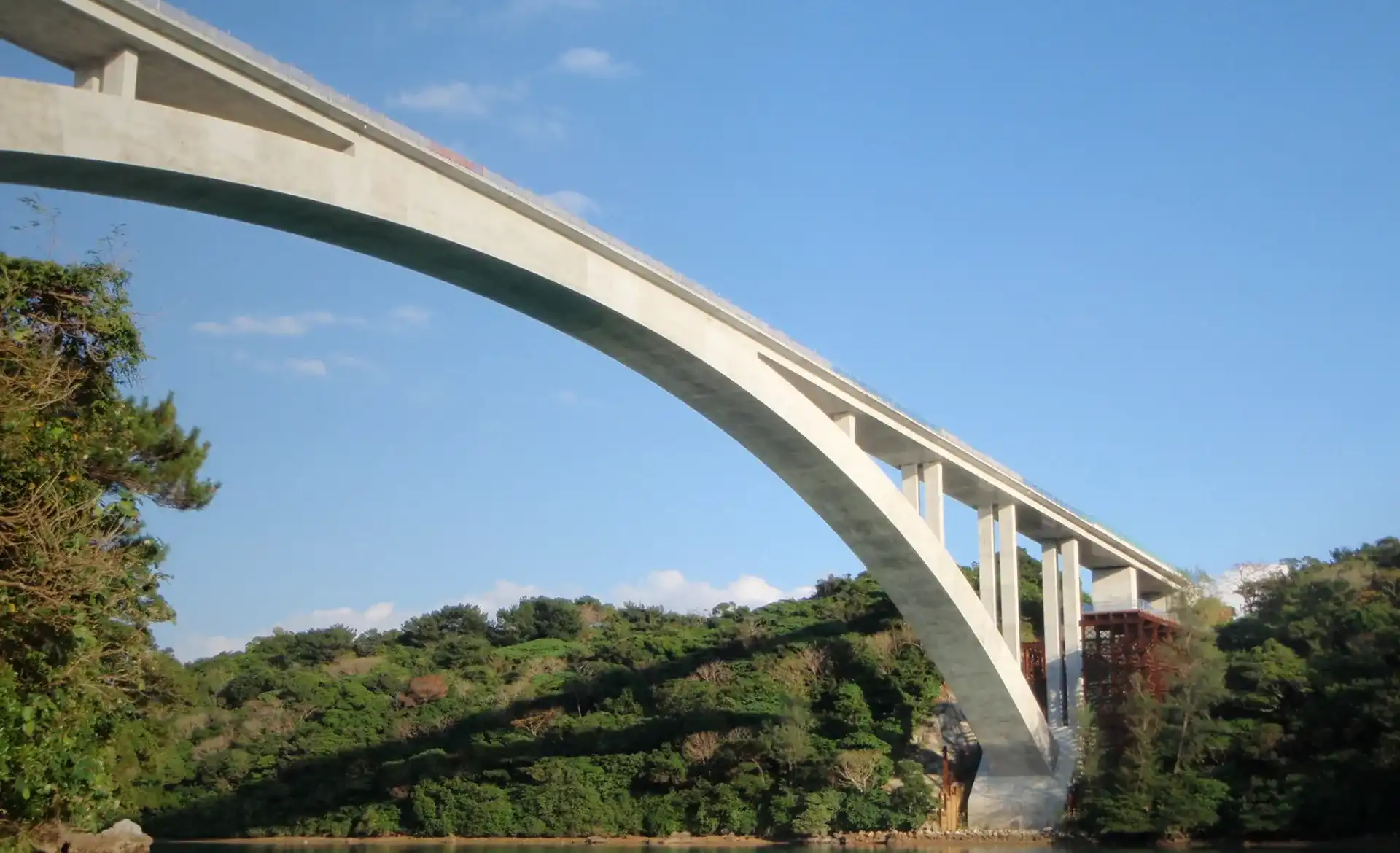
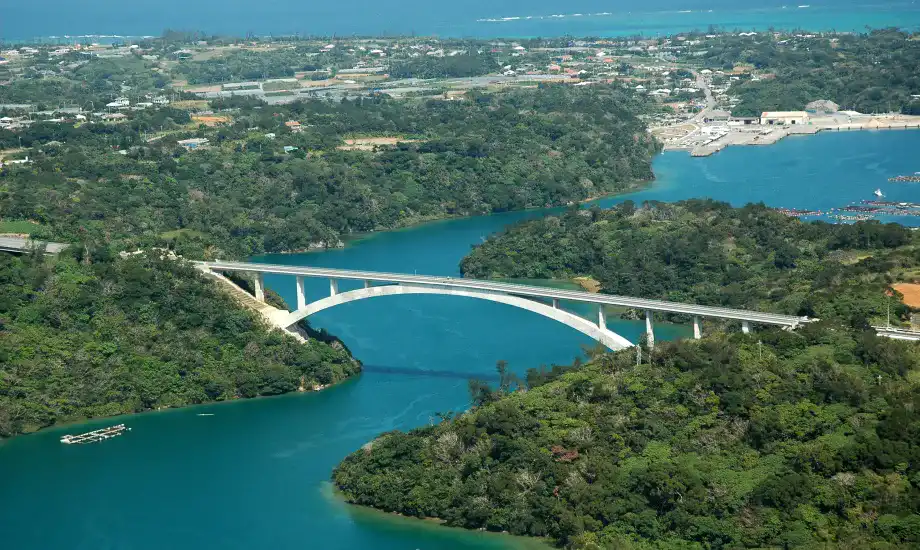
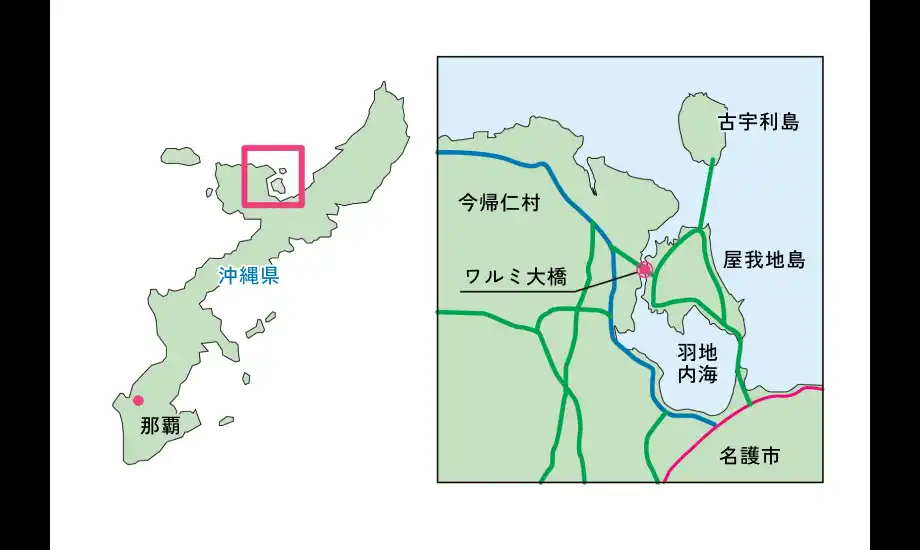
The Motobu Peninsula in northern Okinawa Island is home to famous tourist spots such as the Okinawa Churaumi Aquarium and the Nakijin Castle Ruins, a World Heritage site dating back to the Ryukyu Kingdom era. The Bridge Across the Strait, which was opened in 2010, spans the Warumi Strait located between the Motobu Peninsula and Yagaji Island in the Haneji Inland Sea.
The name of the Warumi Strait, where the bridge is located, is said to derive from a word meaning “fissure,” as the strait features a narrow, steep, and deep waterway between the Motobu Peninsula and Yagaji Island. The tidal flats of Yagaji Island are home to three types of mangrove trees, including black mangroves that grow over 10 meters tall. Migratory birds such as plovers also visit the area, which is designated as a National Wildlife Protection Area. Because the strait is also designated as a typhoon shelter for ships, it was critical that the bridge’s construction did not obstruct maritime navigation. In light of these conditions, an upper-deck type reinforced concrete (RC) fixed arch bridge was selected. This design features no piers in the waterway and “spans the strait in one leap” to preserve the environment and scenic beauty.
Warumi-ohashi is the fifth-longest concrete arch bridge in Japan. Among arch bridges constructed using the concrete lapping method with pre-erected composite arch, it has the longest span in the country.
Features
 Structure and Construction Method
-Building a robust arch
with steel pipes and concrete
Structure and Construction Method
-Building a robust arch
with steel pipes and concrete
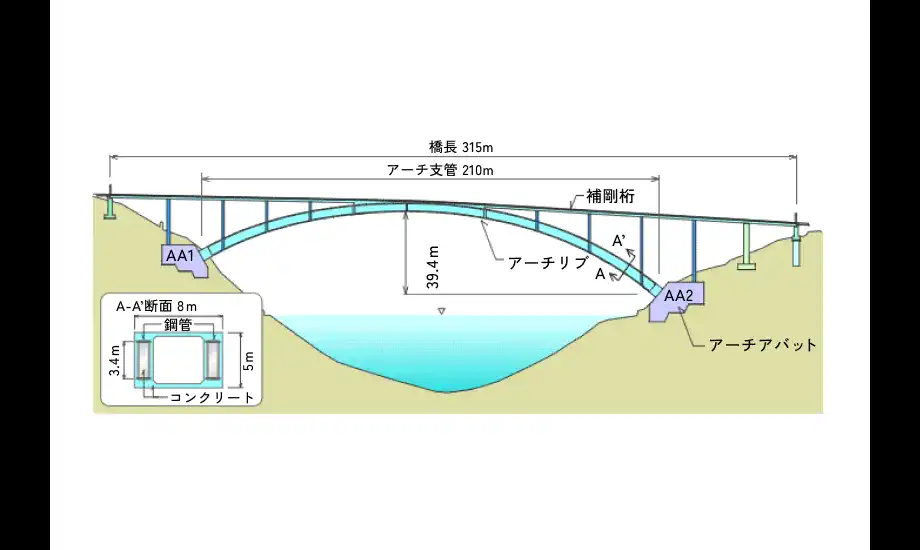
Warumi-ohashi is an upper-deck type arch bridge in which the roadway is supported from below by arch-shaped ribs. The bridge has a total length of 315 meters, with an arch span of 210 meters. The arch is supported by arch abutments embedded on both shores of the strait, with no piers located within the strait itself.
The bridge employs the concrete lapping method with a pre-erected composite arch. Initially, the arch is constructed using steel pipes. Concrete is then poured into the steel pipes, and the exterior is subsequently wrapped with an additional layer of concrete. This process results in a robust composite arch that combines the strengths of both steel and concrete.
 Construction
Spanning the Sea
with a 210-meter Arch
Construction
Spanning the Sea
with a 210-meter Arch
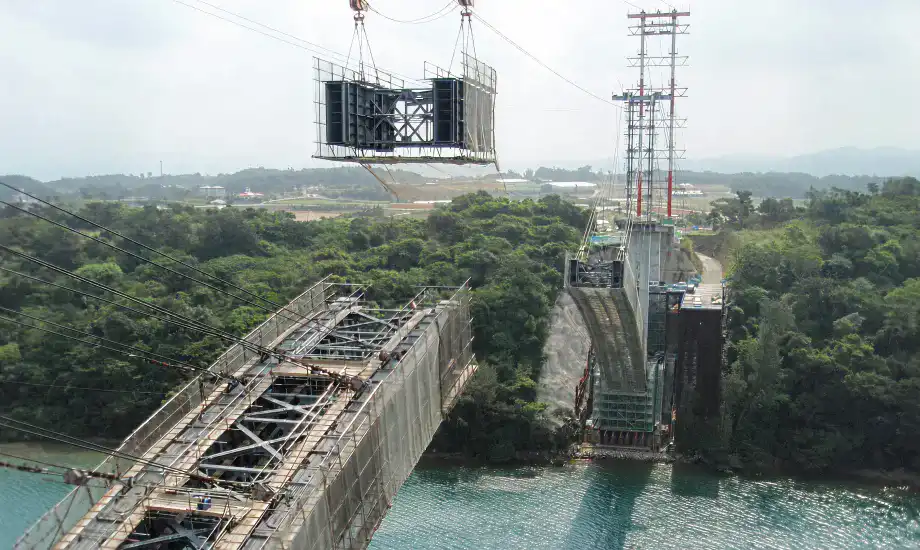
The steel pipe arch was divided into 30 segments. The components were preassembled on land and then transported one by one to the site using a cable crane spanning the strait—similar to a zipline. Each segment was installed in its designated position and secured with bolts. This process was repeated for all 30 segments to complete the steel pipe arch.
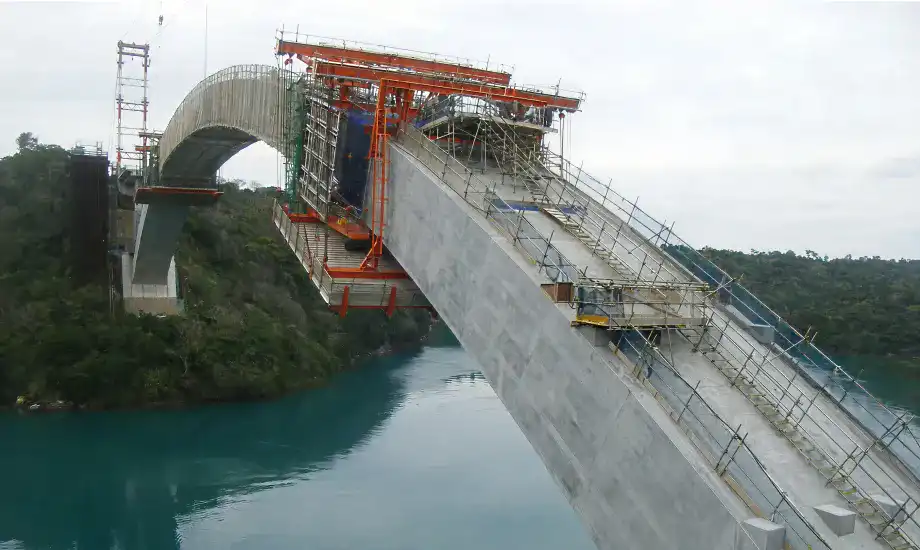
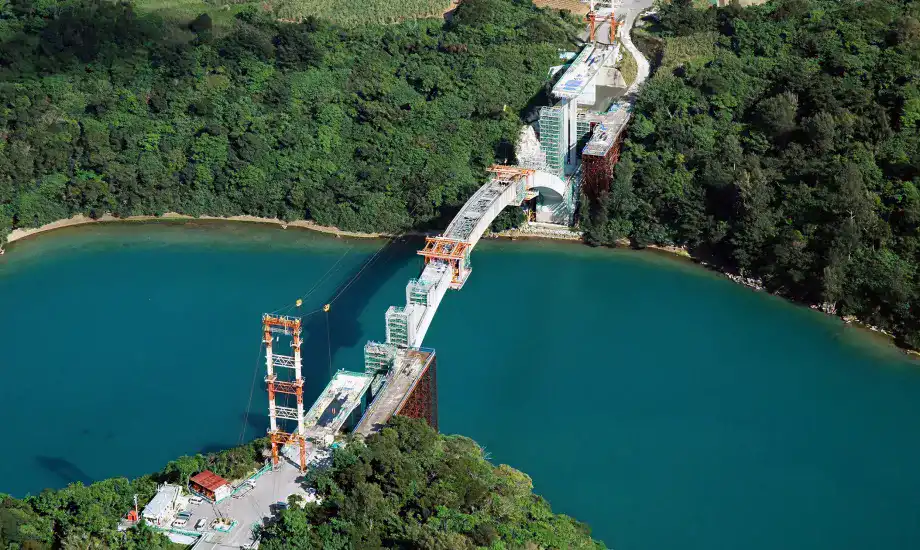
Next, the base sections of the arch on both sides were constructed, and concrete was poured into the steel pipes. Then, using the completed steel pipe arch as a platform, lapping concrete was applied to the exterior with a form traveler.
After the lapping concrete was applied, the stiffening girder above the arch was constructed, followed by the roadbed. Installation of all girders was completed in October 2009.
 Environmental Preservation
—To Protect Okinawa’s Rich Marine Environment
Environmental Preservation
—To Protect Okinawa’s Rich Marine Environment
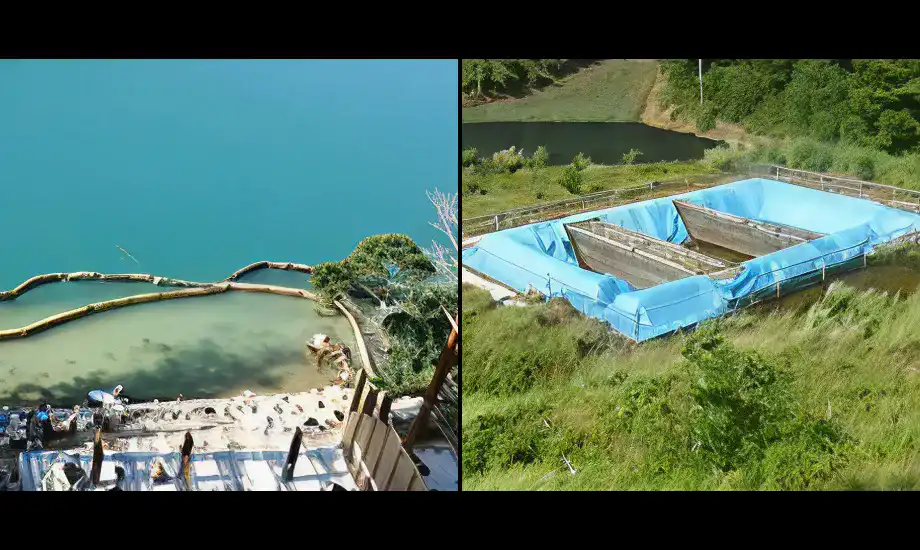
As mentioned above, the area surrounding Warumi-ohashi is blessed with natural environments such as tidal flats and mangrove forests. In addition to designation as a quasi-national park, the region is also notable for active fish farming. The construction site is covered with Okinawa’s distinctive fine-particle “red soil (maji).” Should this soil flow into the strait, it could result in water pollution and have a significant negative impact on the environment and fisheries. In Okinawa Prefecture, red soil runoff into the ocean has long been a concern, so the utmost care was taken in this project to prevent it. To prevent red soil from being carried by the wind, the roads used for construction were pre-paved. Sheets were placed over excavated areas to prevent runoff during rainfall.
As most of the concrete placement was conducted offshore, comprehensive measures were taken to prevent concrete from falling and cement from entering the sea.
 Contribution to the Region
—Bridges as Essential Infrastructure
in an Island Nation
Contribution to the Region
—Bridges as Essential Infrastructure
in an Island Nation
Four years after construction began in December 2006, Warumi-ohashi held its official opening ceremony in December 2010. The ceremony was attended by numerous representatives from Nago City (on the Yagaji Island side) and Nakijin Village (on the Motobu Peninsula side), as well as local residents. After the tape-cutting, a ceremonial first crossing was held to celebrate the opening.
In addition, Warumi-ohashi received the 2010 Prestressed Concrete Engineering Association Award (Project Category). That year, our company also received the same award for two other bridge projects—Amarube Bridge and Yumekake-ohashi Bridge—marking a triple award win for our constructions.
In our island nation of Japan, bridges that connect regions play an extremely important role as part of everyday infrastructure. With the opening of Warumi-ohashi, access from the Motobu Peninsula to Yagaji Island and surrounding areas greatly improved, contributing to tourism development, administrative and welfare service enhancement, and further regional growth. Through projects like this, the company will continue contributing to the further development and value creation of local communities and society as a whole.
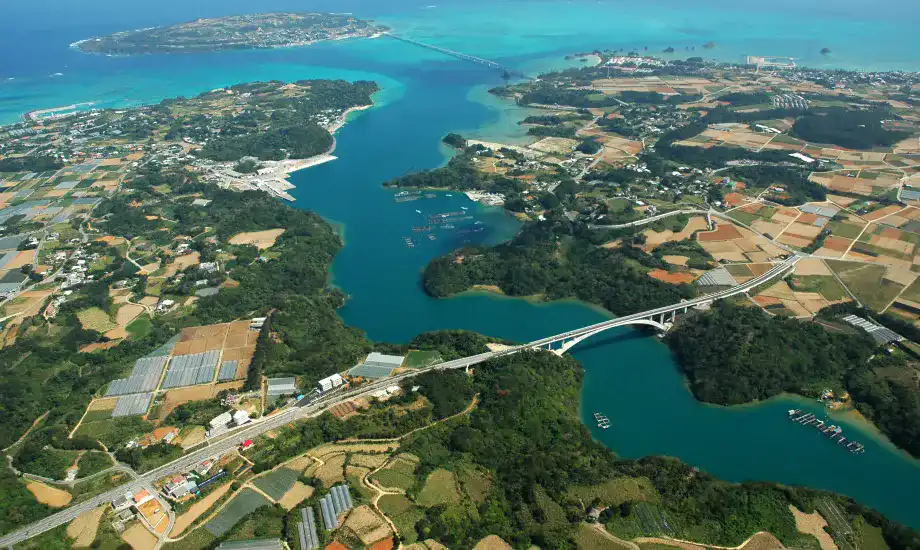
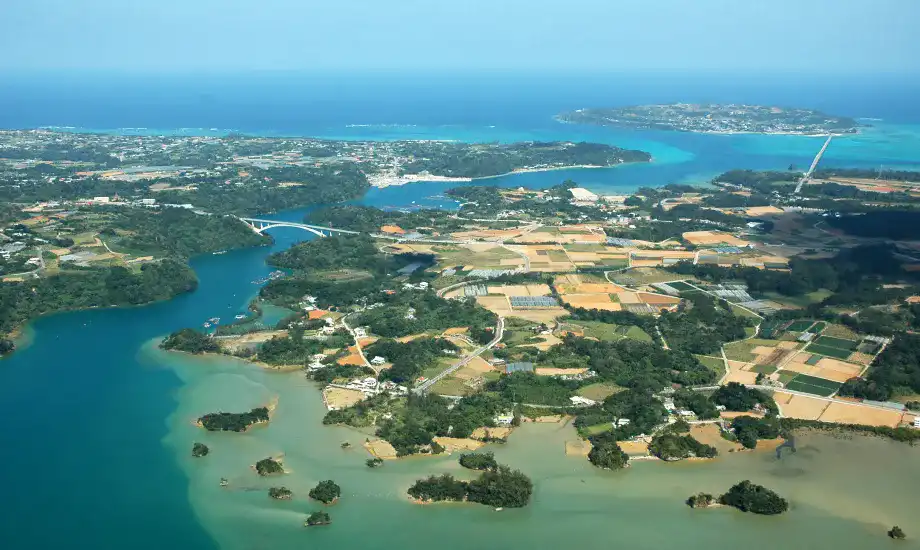
In the background, you can also see Kouri Bridge,which connects Kouri Island (top left) and Yagaji Island.With the opening of Warumi-ohashi,access from Kouri Island to the Motobu Peninsula was also significantly improved.
Bridge across the StraitBridge across the Strait
Project Overview
-
- Construction Site
-
Okinawa Prefecture – from Nakijin Village to Nago City
-
- Project Owner
-
Okinawa Prefecture
-
- Design
-
Joint venture between CTI Engineering Co., Ltd. and Chuo Kensetsu Consultant Co., Ltd.
-
- Construction Period
-
December 23, 2006 – March 25, 2010
-
- Project Overview
-
Upper-deck type reinforced concrete fixed arch bridge
Bridge length: 315.0 m (arch span: 210.0 m)